12-02-2025
The Role of Forensic Accounting in Uncovering Financial Statement Fraud
Introduction
Financial statements are fundamental documents used by stakeholders, including investors, creditors, regulators and management, to assess the financial performance of an entity. However, it is not uncommon for financial statements to be manipulated to mask the true condition or create a financial picture that is better than reality.In the book "Forensic Accounting" by Dr. Mohamad Mahsun (2023), it is explained that forensic accounting plays a role in detecting, analyzing, and exposing financial statement fraud using an evidence-based investigative approach. Forensic accountants are not only tasked with auditing the numbers in the financial statements, but also looking for patterns of fraud, identifying modus operandi, and collecting legal evidence that can be used in litigation.
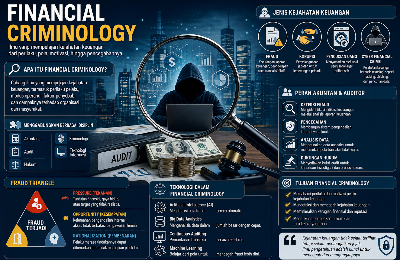
What is Forensic Accounting?
Forensic accounting is a branch of accounting that combines investigative auditing methods, data analysis, and legal aspects to detect and prove fraud in finance (Mahsun, 2023).
Forensic accounting focuses on:
- Identify anomalies in financial statements
- Investigation of suspicious financial transactions
- Use of data analysis and digital forensics techniques
- Preparation of investigative reports and provision of expert testimony in legal cases.
Types of Financial Statement Fraud
a. Manipulation of Income and Expenses
- Overstatement: Recording fictitious revenue or recognizing revenue early before the transaction occurs.
- Understatement: Delaying the recording of expenses to make profits appear higher.
- Recording fictitious assets that are not actually owned by the company.
- Not recording liabilities or debts to make the balance sheet appear healthier.
- Modifying financial statements to create the impression that the company is in good financial condition, for example by delaying the recording of expenses until the next period.
- Creating transactions with affiliated companies to disguise unhealthy finances.
- Hiding the flow of funds through third parties that are difficult to detect.
Fictitious Case Study: A Forensic Accounting Investigation
Case Chronology
A technology company called PT Omega Digital has experienced rapid growth in recent years. However, its latest financial report showed profits that were much higher than analysts' projections, despite the industry slowdown.
A suspicious investor asked a team of forensic accountants to investigate the company's financial statements before making a large investment.
Forensic Accounting Findings
- Fictitious Revenue Recognition Companies record revenue from transactions that have not yet occurred. They create fictitious sales contracts with affiliated companies and record them as revenue in the financial statements.
- Operating Expense Manipulation Some large operating expenses that should have been recorded in the current period were deliberately postponed to the next period to increase profits in the current financial statements.
- Overstatement of Asset Value The company's fixed assets, such as equipment and software, are valued much higher than their fair value to inflate total assets and cover unrecorded liabilities.
- Forensics Digital After conducting a digital analysis of the company's accounting system, evidence was found that some transactions had been modified by management before the financial statements were published.
Forensic Accountant Steps in Uncovering Fraud
- Analysis Ratios Financial The team of forensic accountants compared the company's financial ratios with industry standards and found glaring discrepancies that were not reasonable.
- Document Verification and Interview Transaction documents were tested for accuracy by comparing the data provided with information from vendors and customers. Interviews with finance staff revealed that they were instructed to change revenue records.
- Use of Data Analytics and Benford’s Law The numbers in the financial statements are analyzed using Benford's Law, which helps detect patterns of unusual numbers that often appear in manipulated financial statements.
- Reporting and Legal Action The results of the investigation were compiled in an investigative report, which was submitted to regulators and law enforcement authorities. Eventually, several company executives faced prosecution for financial statement manipulation.
The Role of Forensic Accounting in Fraud Prevention
- Implement a whistleblowing system to provide protection to whistleblowers of suspected fraud.
- Conduct periodic internal audits with a focus on suspicious transactions.
- Using data analytics technology to detect anomalies in financial statements earlier.
- Provide forensic accounting training to internal auditors so that they can recognize signs of fraud early on.
Conclusion
Forensic accounting has a very important role in detecting and exposing fraud in financial statements. With evidence-based investigative methods, data analytics technology, and a deep understanding of fraud patterns, forensic accountants can help organizations avoid huge losses due to financial manipulation.The case of the fictitious PT Omega Digital shows how fictitious revenue recognition, asset manipulation, and financial statement engineering can create a misleading financial picture. However, with the application of forensic accounting techniques, this kind of fraud can be identified and prevented early on.
As a proactive measure, organizations should strengthen internal control systems, implement regular investigative audits, and work with professional forensic accountants to create a transparent and accountable business environment.